
Missed dose reference
GLP-1 Missed Dose Tracker
A practical reference for keeping skipped, late, and resumed GLP-1 doses separate from clean administrations, so the history is easier to review later.
Missed dose flow
Missed doses should stay separate from clean doses
The goal is a clear timeline: what was due, what happened, what was skipped or late, and when the regular schedule resumed.
Record what was due
Log the product, scheduled date, dose, and normal cadence.
Mark what happened
Separate taken late, skipped, changed, or resumed doses.
Keep product instructions nearby
Missed-dose windows differ across products; do not generalize one rule to all medications.
Review the adherence pattern
A clean missed-dose history is easier to discuss with your clinician.
What to write down
A missed-dose log needs the sequence
Keep only the details that make the history easier to read later. Everything else belongs on your prescription label, Medication Guide, or with your clinician.
Product
Exact medication name.
Scheduled date
When the dose was supposed to happen.
Actual outcome
Taken late, skipped, resumed, or changed.
Next scheduled dose
Useful context for product-specific instructions.
Question note
Anything to ask your clinician or pharmacist.
Common questions
GLP-1 missed dose questions worth answering clearly
Short answers for common tracking questions. For medical decisions, use your prescription label, Medication Guide, pharmacist, or clinician.
No. Missed-dose instructions vary by product. Use the exact product label and clinician instructions.
Track the product, scheduled date, actual date if taken late, whether it was skipped, and when the regular schedule resumed.
Because skipped, late, and completed doses tell different stories during adherence review.
No. If instructions are unclear, ask your clinician or pharmacist. A tracker should record what happened, not invent medical instructions.
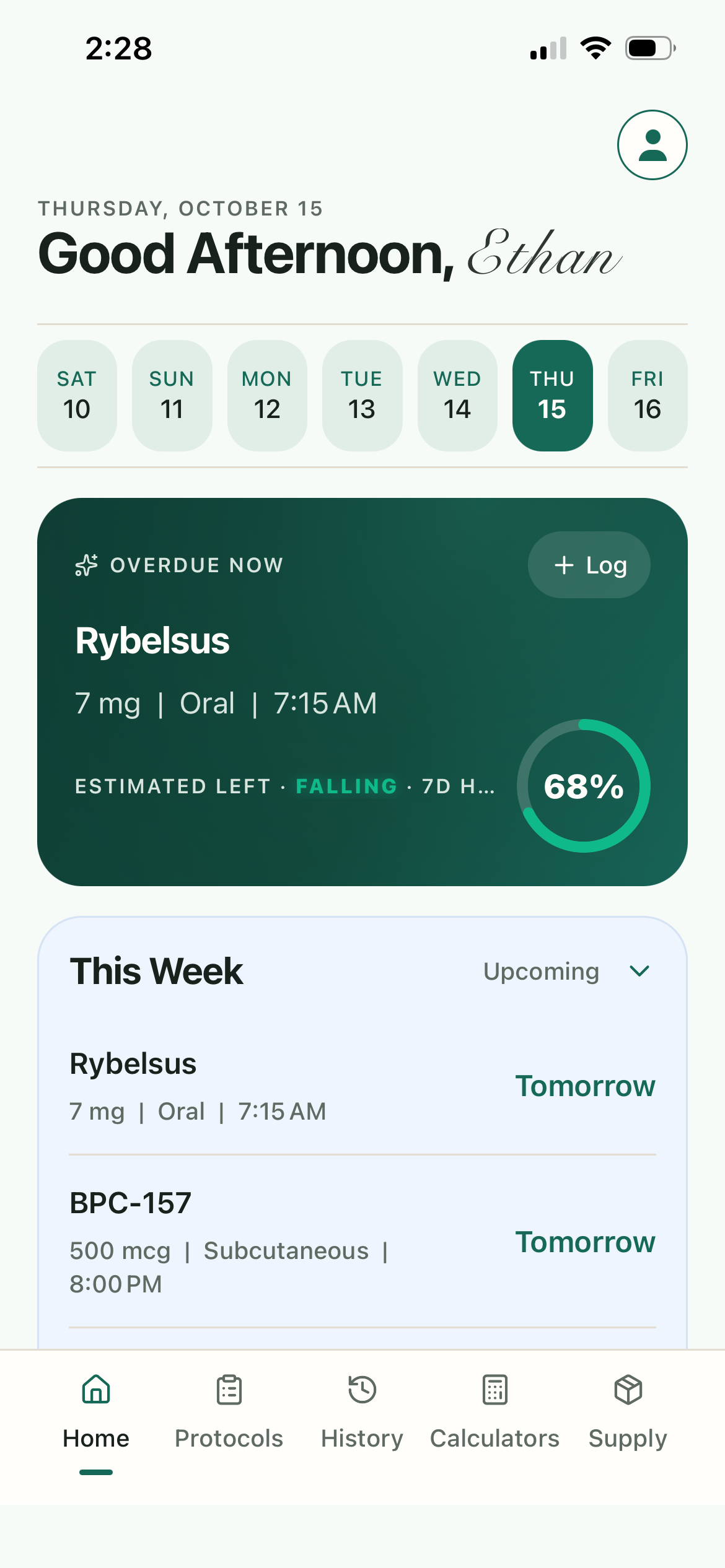
Protocolit keeps missed and late doses separate from clean administrations so the timeline stays readable.
Built for this
Keep it all together with Protocolit
Protocolit is built to keep your protocols, dose administrations, titrations, missed doses, injection sites, supply, expiration dates, and weight trends together. Leave the routine to us, so you can focus on the journey.

 Coming soon